Deployment Process and Product upgrade

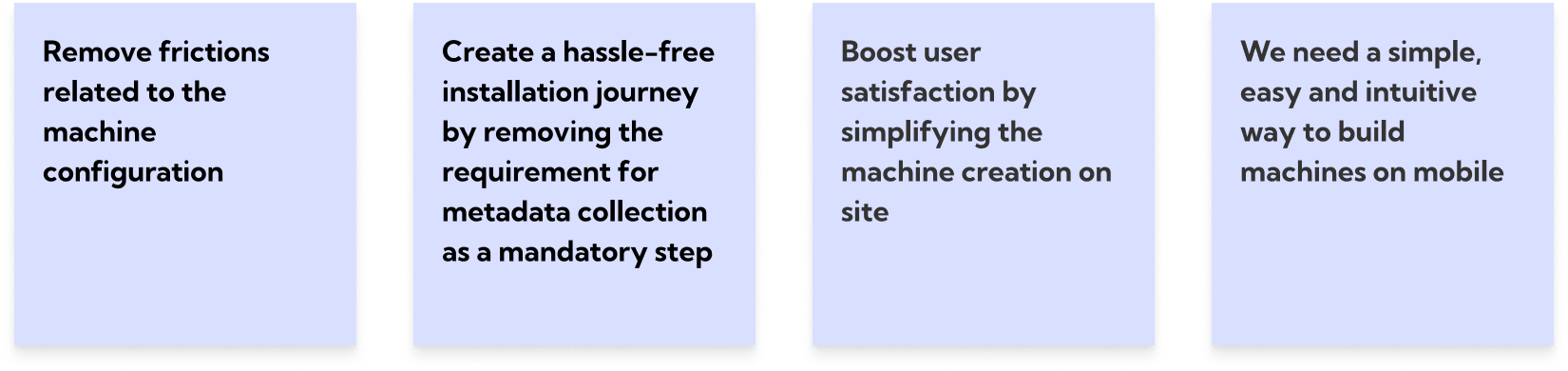
Shape and design our vision of the deployment process through the TTV (Time to value TCO) lens.

Overview

The Augury Deployment process faces hurdles across various stages, spanning from sales handover to physical site installation.

The EPIC document outlines a succinct approach encompassing asset collection, site survey, job planning, and execution. To address these challenges, we present short and long-term solutions for a lightweight, scalable, and COVID-proof deployment process. This aims to enhance efficiency and resilience, guided by the EPIC document, ensuring a seamless deployment experience for Augury.
My Responsibilities

In my role as the product designer for the fleet, I led the comprehensive enhancement of the end-to-end user experience. This involved refining both the product itself and the underlying processes.

I took apart the unsatisfactory old experience and created a brand new and improved one.Working closely with Tal Gurevich as the PM, Omer Salomon as lead dev to build the best process and solution we could.

The Problem

Our current machine information collection systems significantly impede our efficiency due to their complexity, coupled with the need for multiple physical site visits by Augury technicians; moreover, the collected data is not optimized for our service delivery efforts, highlighting an inefficient deployment process.

🤯  The systems we use to collect our machine information slow us down significantly

😤  Scheduling is an incalculable overhead

😱  We scatter information between several systems – expanding accounts like this is predictably non-scalable

😰  We do not exactly know why we collect what we collect

The Goal

Reduce friction during survey planning and execution to enhance our delivery pace to 1.2K monthly installed machines.


— Supported TCO – Time to Value —

Culture

UX Goal

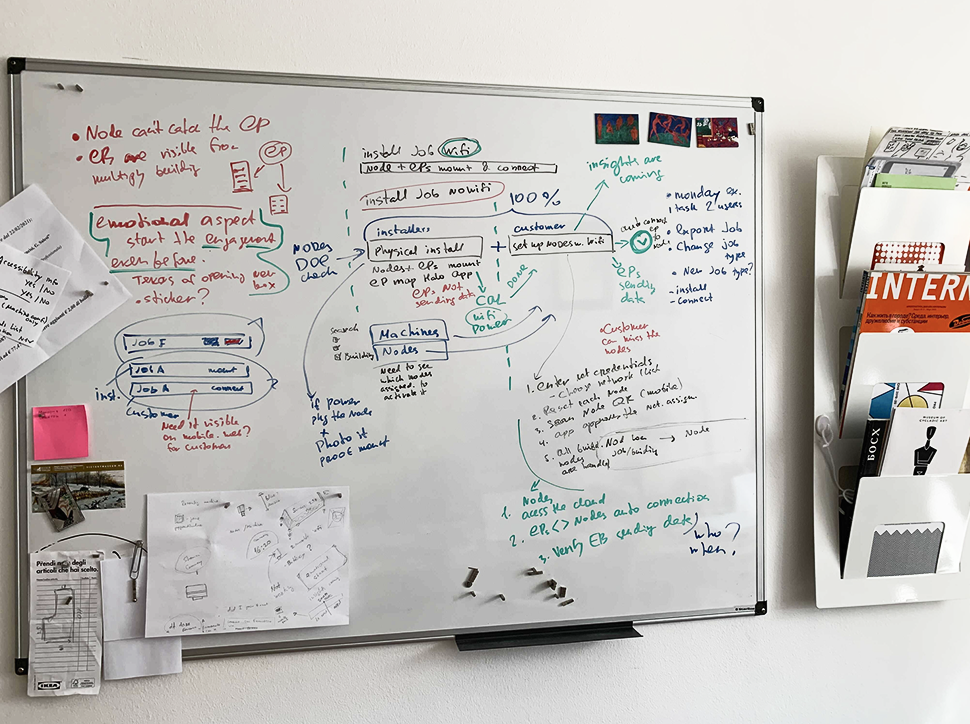
Understanding the process

I began this effort by learning about the existing process so I can find ways to make it better for our company goals and for a smoother user experience.

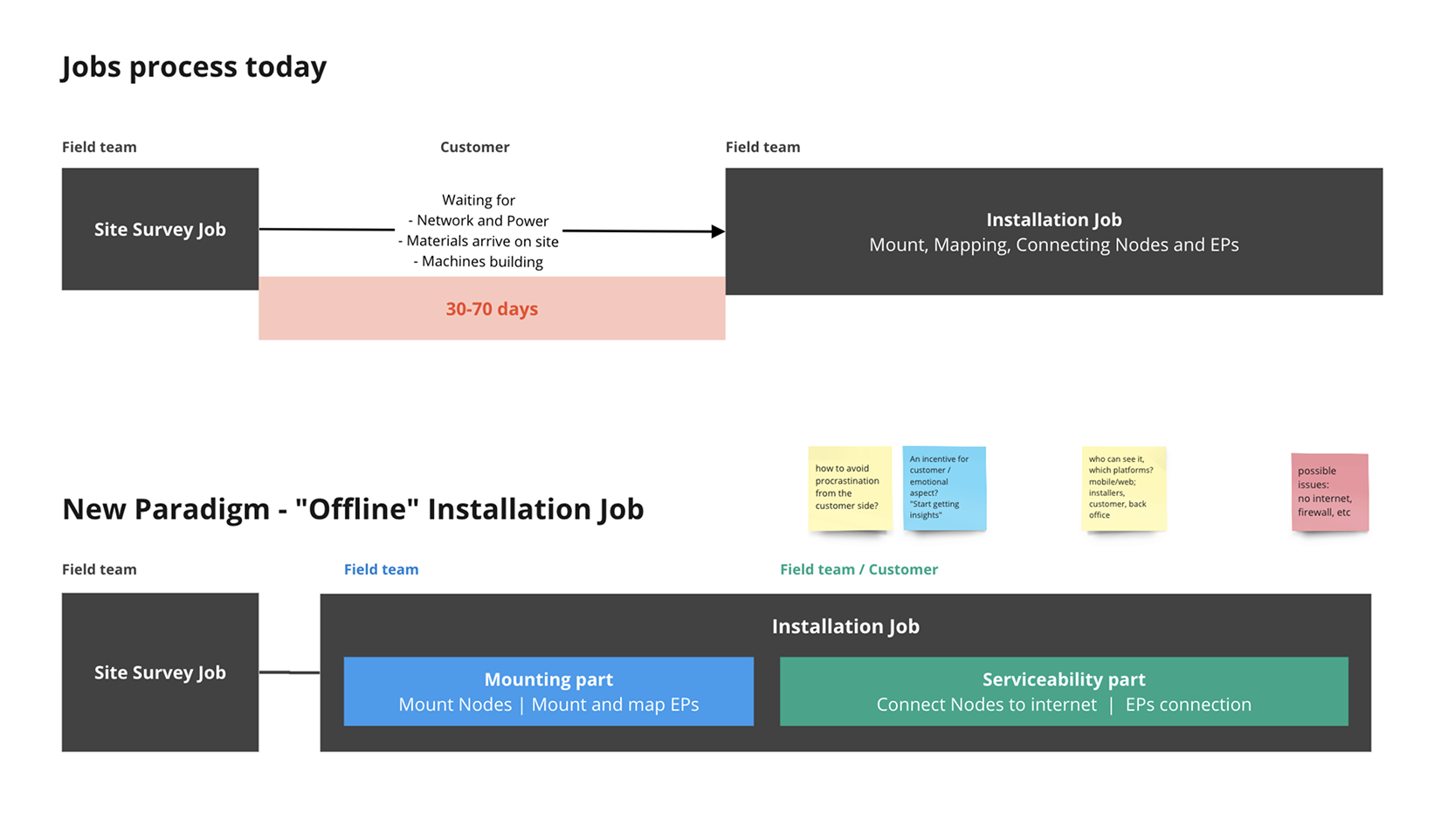
The new paradigm appeared to be the optimal solution for meeting our goals and achieving the desired outcomes.

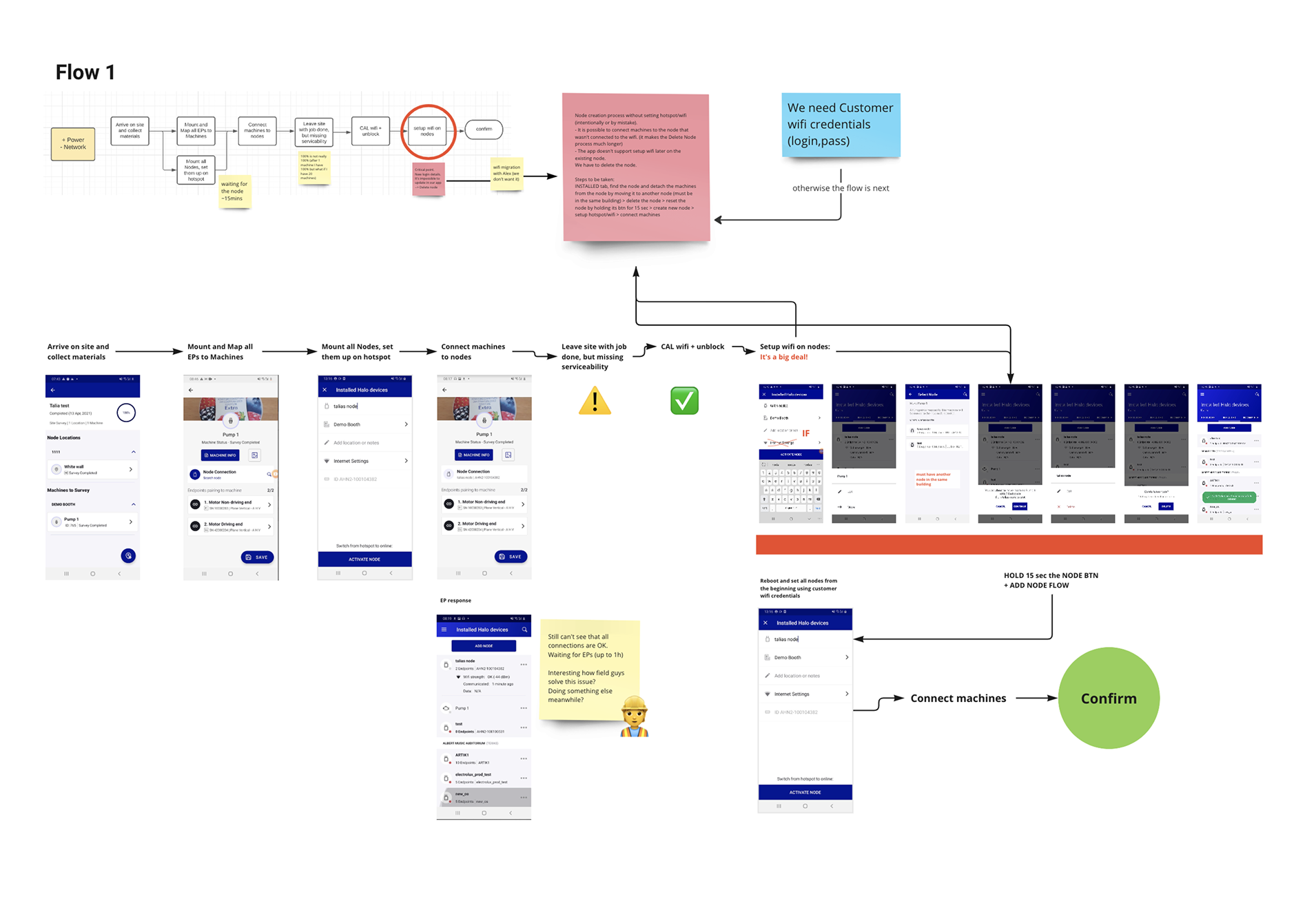
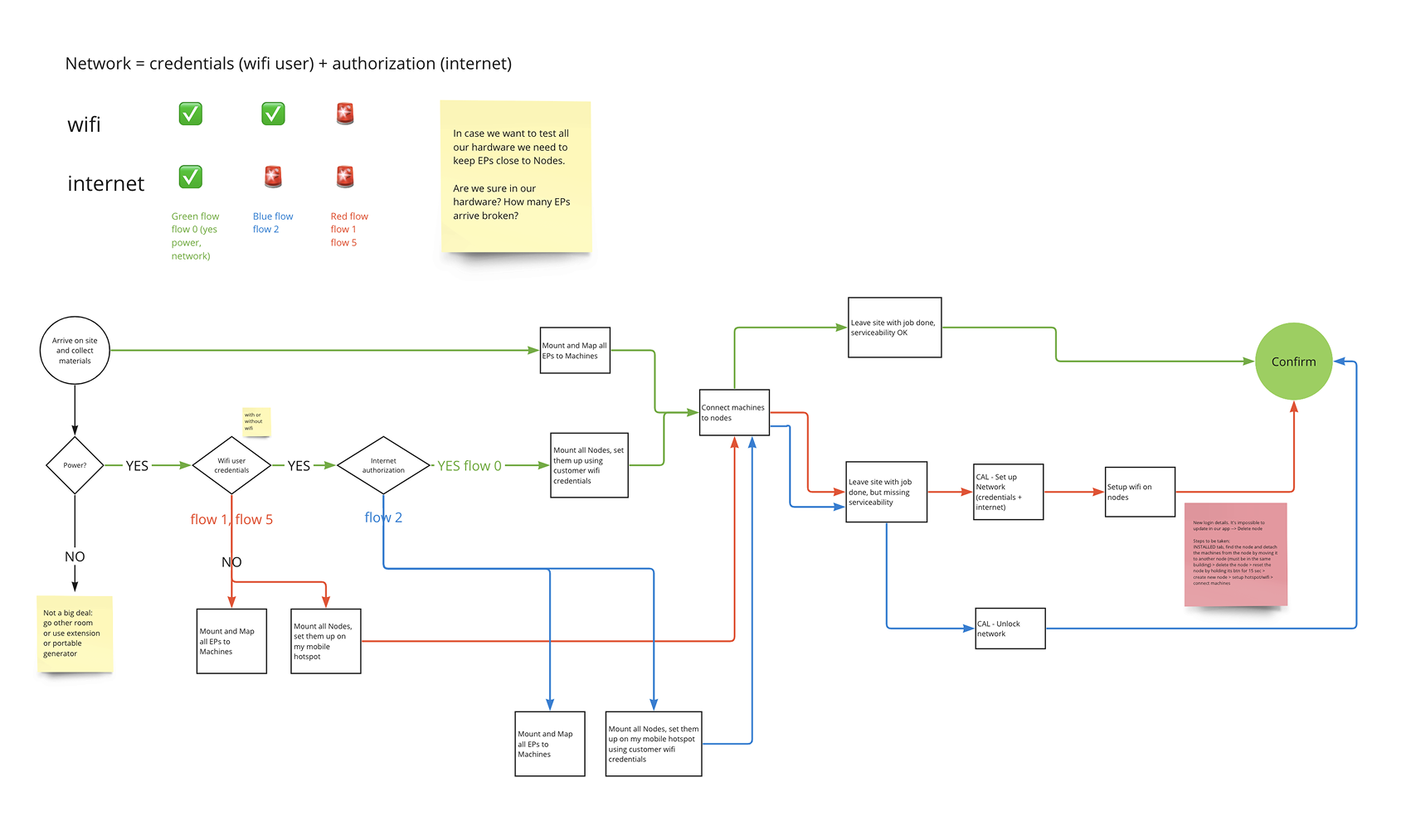
Mapping the NEW process flow

Then, I had to understand the core structure of the user flow, identify critical UX touch points, and highlight the expected outcomes for our users. Making sure our installers can perform the deployment tasks in every scenario.

Installation app audit

Risk Identification

I identified problematic parts by pinpointing areas where the existing product fell short or encountered challenges. This involved functionality issues, user experience problems, performance bottlenecks, and outdated technology

Iterative Improvement

Used the feedback gathered during testing to iterate on my proposed changes. I continuously refined my adaptation strategies based on real-world insights

Prioritization

I prioritized the identified problematic parts and potential adaptations based on their impact and feasibility. I focused on changes that would provide the most significant improvements while considering the resources available

Communication

Kept all stakeholders informed about the process, progress, and potential changes. Clear communication ensured everyone was aligned and aware of the ongoing efforts

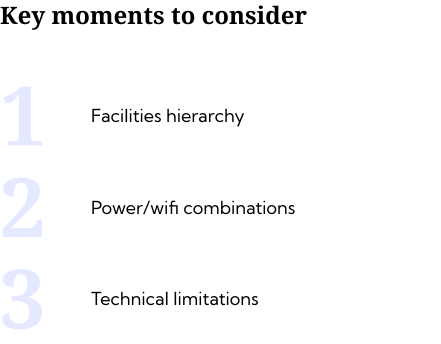
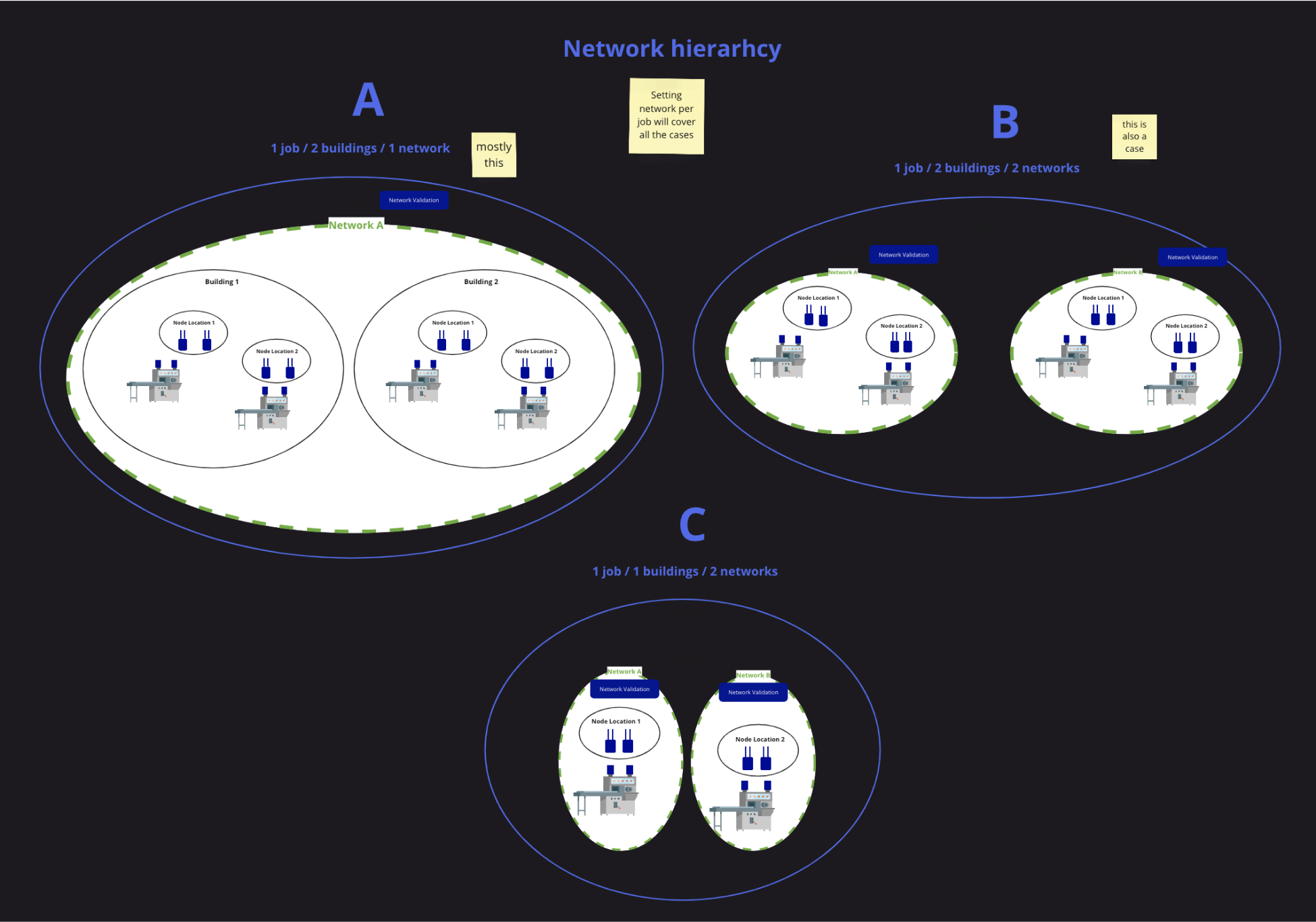
Hierarchy Considerations

Then, I had to understand the core structure of the user flow, identify critical UX touch points, and highlight the expected outcomes for our users. Making sure our installers can perform the deployment tasks in every scenario.

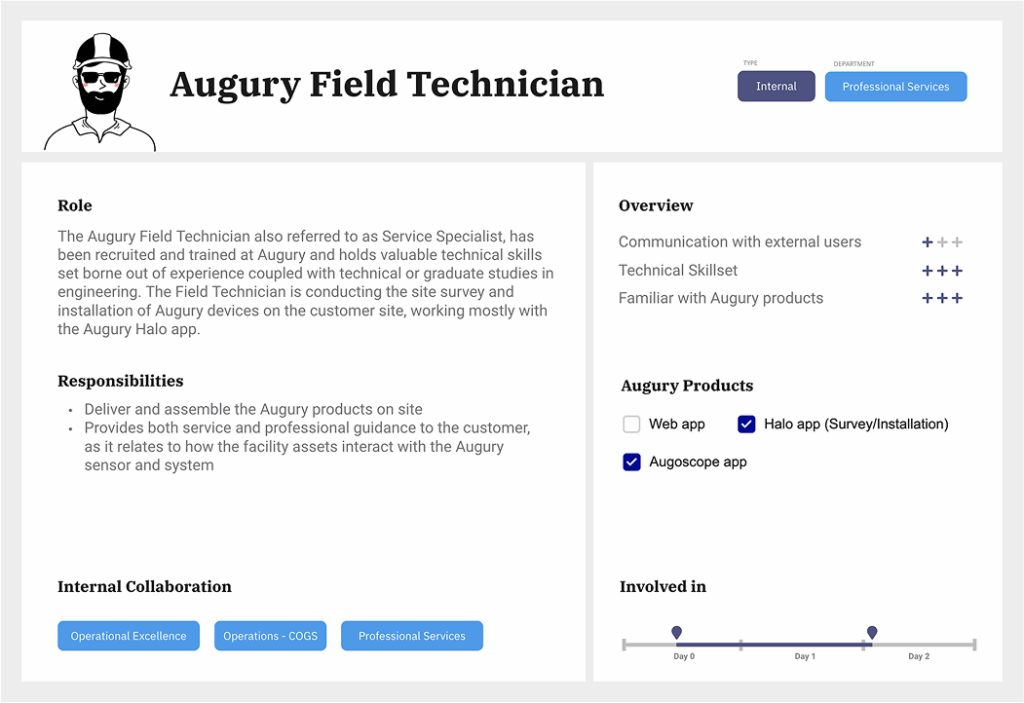
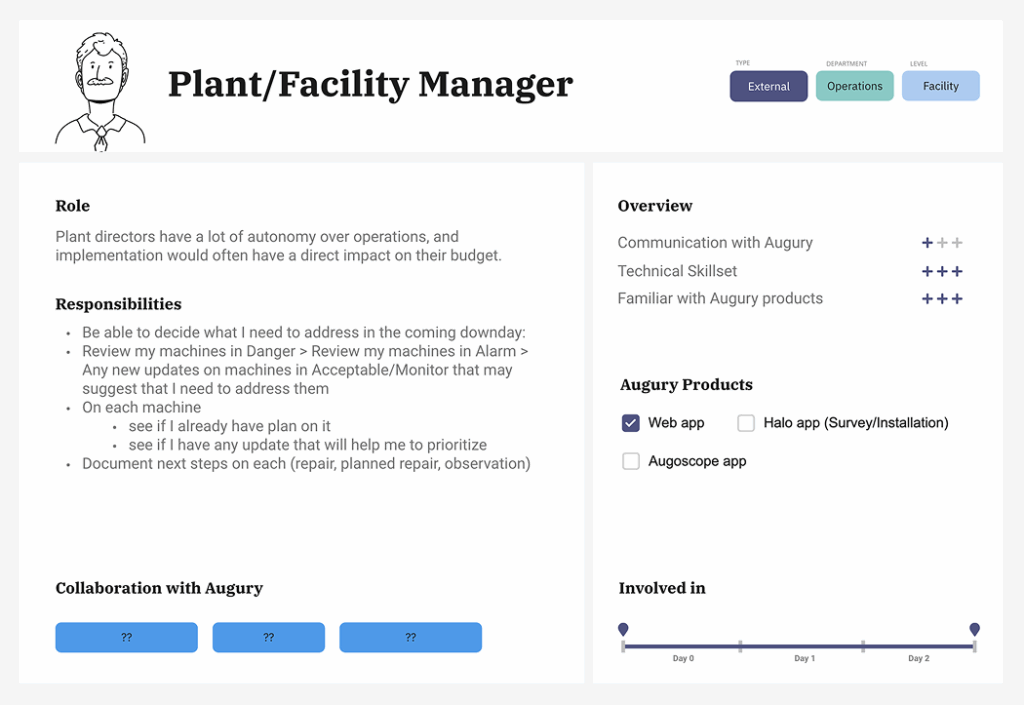
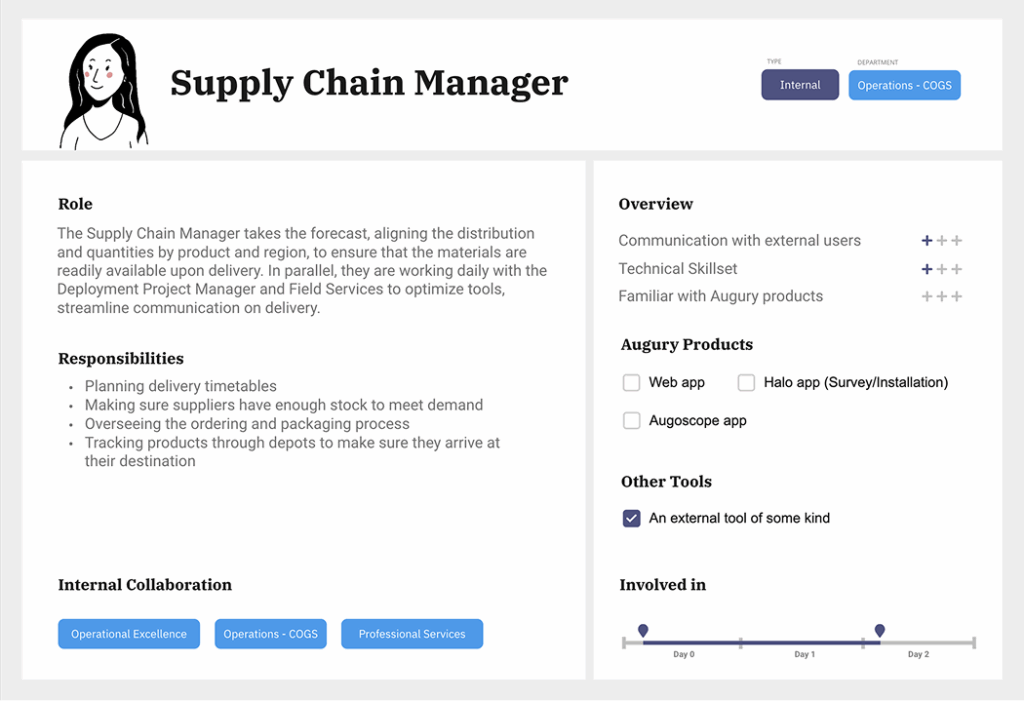
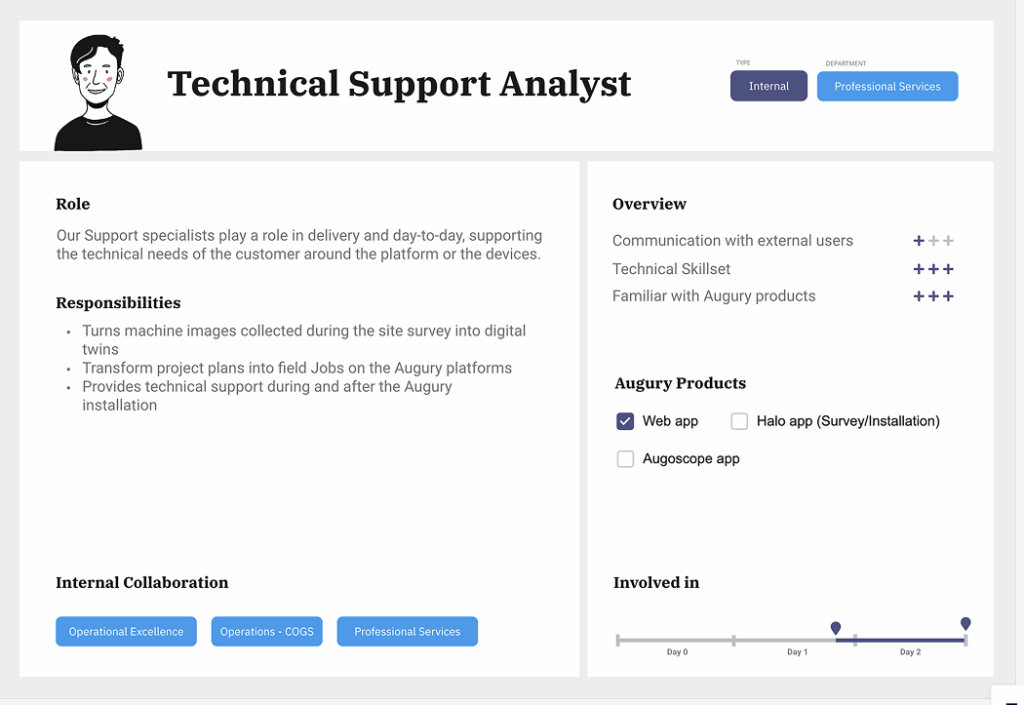
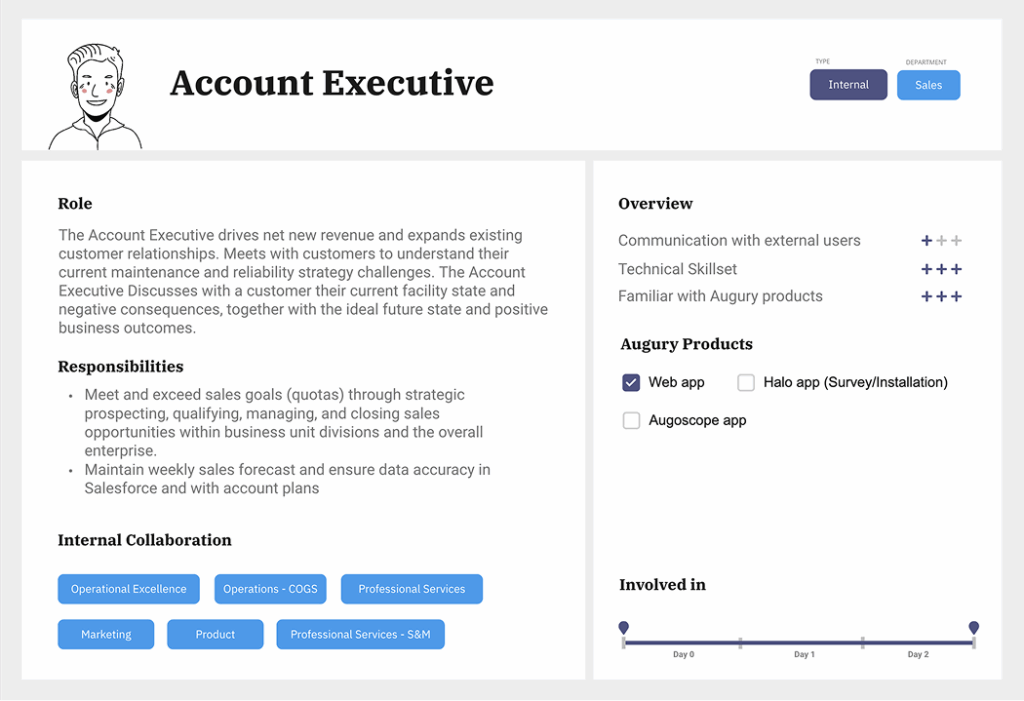
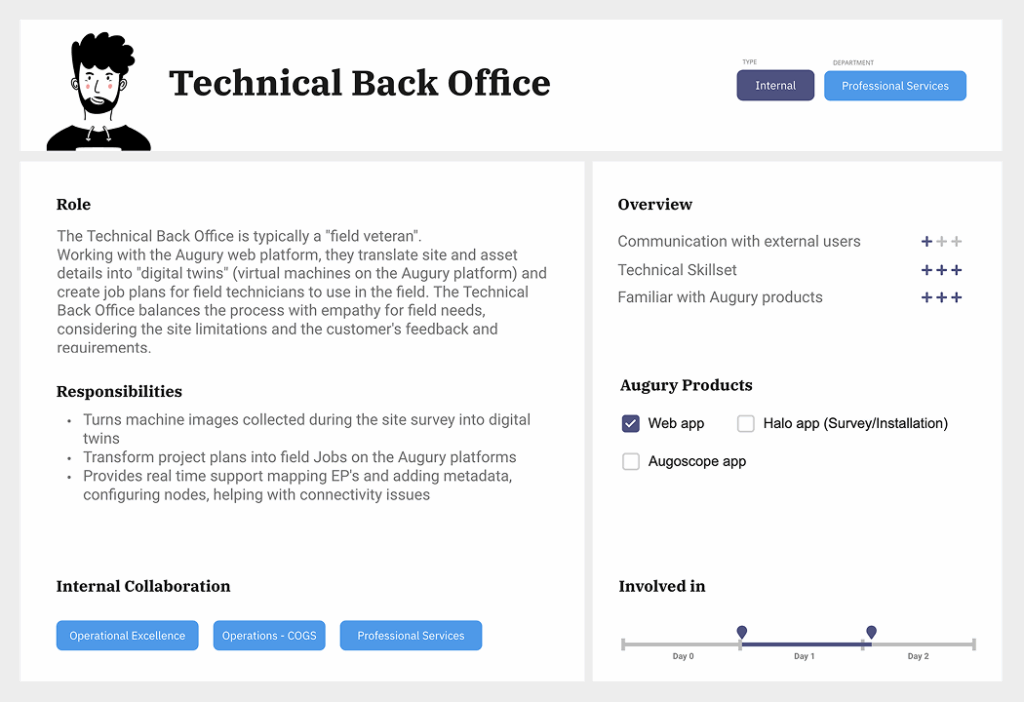
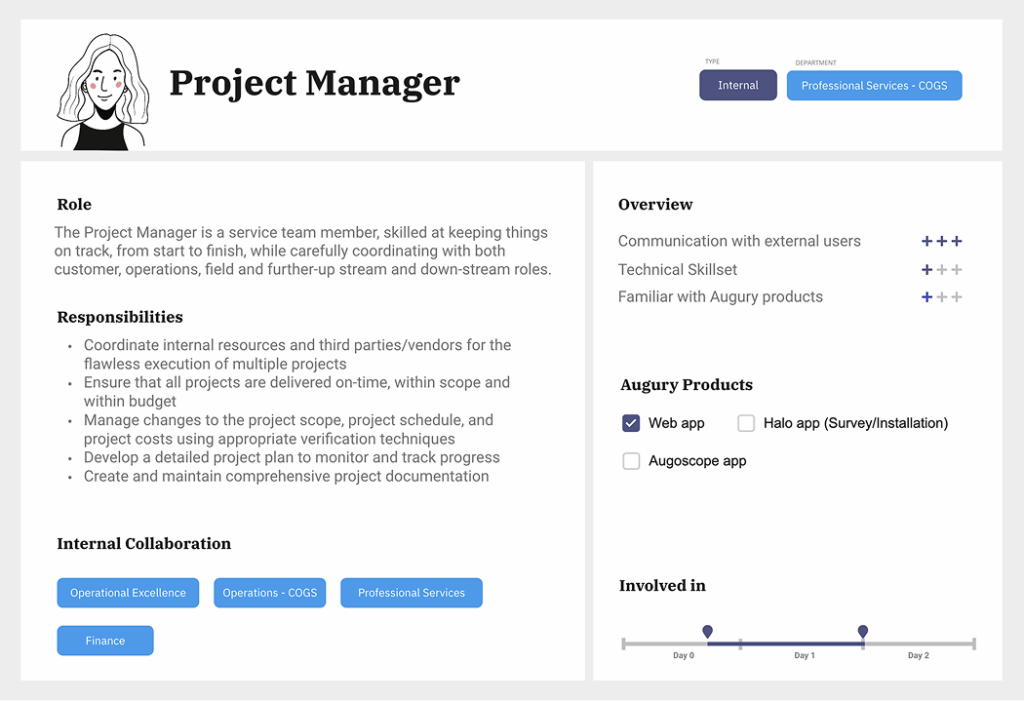
Personas

This initiative represents an EPIC that has implications for several user personas, as our deployment process initiates upon the signing of a purchase order (PO) and concludes with the physical installation of hardware sensors on the machines.

Narrowing down the new installation motion

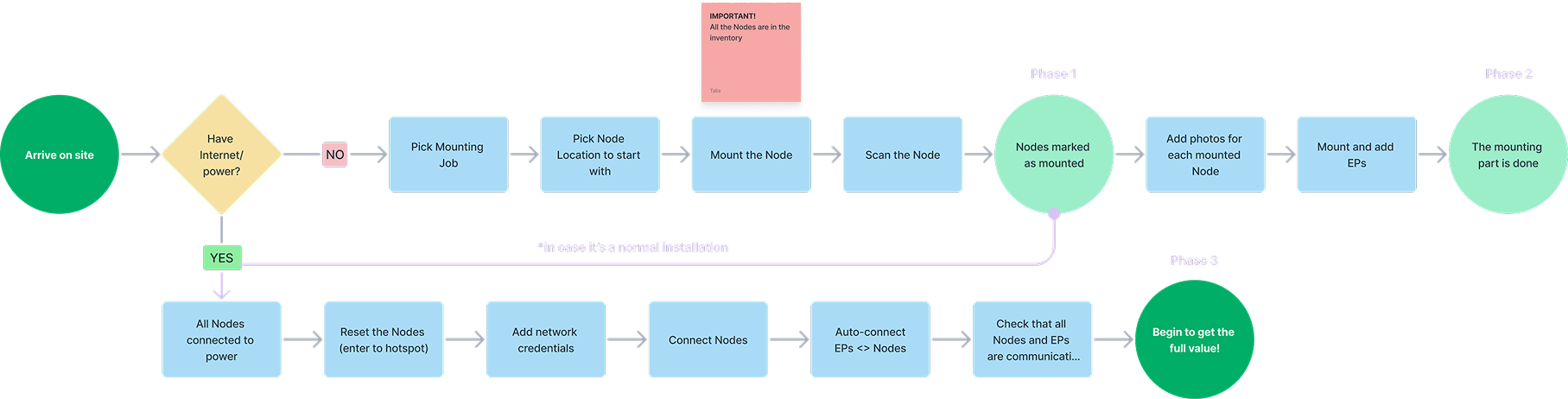
This “offline installation” flow detailed below was primarily built to enable the offline install motion but it has the added benefit of adding flexibility to the online installation as well. The same flow will be applicable for both offline and online installations.

Thus, the install flow will be divided into two parts Mounting and Activation:
Mounting
– EPs will be physically mounted and mapped (flow unchanged)
– Nodes will be physically mounted
– Nodes will be added to the job .The Nodes will be able to be added even if there is no electricity and/or wifi by means of scanning the node QR code.
– Nodes will be linked the the machine (flow unchanged)

Activation
– Nodes will be turned on and put into hotspot mode
– Wifi credentials will be entered for each node.

What we got?

Reviewing both the epic and the breakdown of the new process has allowed us to precisely identify the initiatives and features that demand development. Our strategic planning for the next three quarters ensures that each of these initiatives not only advances us toward our ultimate goal but also carries substantial impact on its own.

Planned Initiatives

1. Offline Installation Alpha.


I’ve proposed an MVP that will begin by distinguishing between the Mounting and Installation phases. For the alpha testing, we could execute it in facilities with power and connectivity, thus testing the concept.

2. Survey to installation.

As we continue our journey towards providing a complete offline installation experience, we recognize the shared elements between Survey and Installation Jobs. To make the most of this synergy, we’re actively working on merging these aspects.

3. Node to Job.


Establishing a link between Jobs and Nodes enhances precise visibility into Node details and status. This is crucial for seamless offline installation, as well as for facilitating Mounting and Serviceability.

4. Metadata independent install.

In order to speed up our deployment we must unblock the unnecessary dependency of installation on metadata.

5. Installation Event Transparency.

They say every good thing must come to an end. The same holds true for our installation motion. Defining the organizational criteria for this endpoint is crucial to signal the completion of the delivery process.

Thank you for reading

Good products don't just happen.

Product Design & Consulting    UX Strategy    Usability Evaluation    Research    Branding for Startups    Messaging & Positioning    Investor-Ready Storytelling    Data Visualization    Mentoring