Transportation mobile app MVP
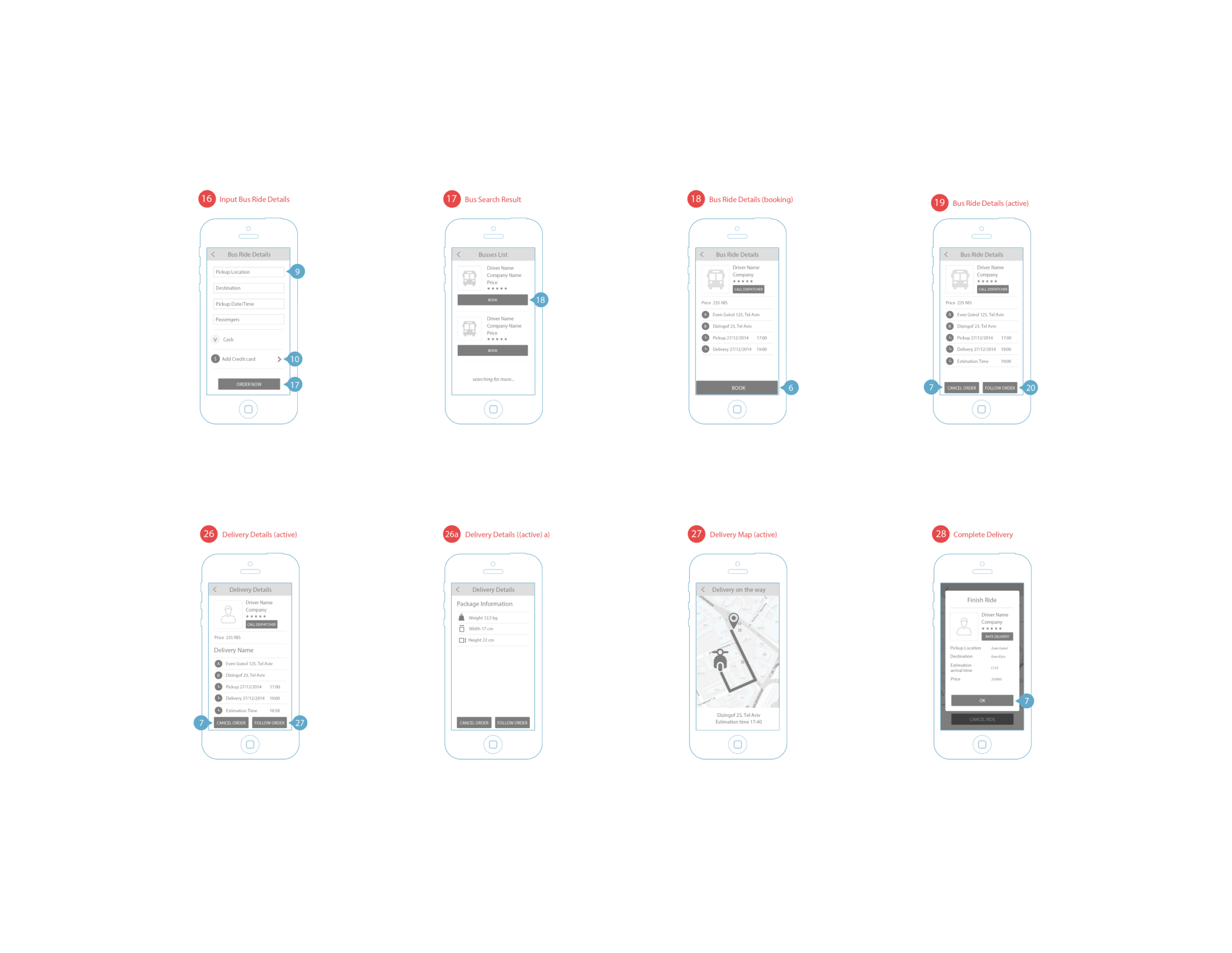
For this project, the client already brought thorough market research and a clear vision. Together, we decided to wireframe the entire application in detail.
This approach allowed the client to map out every process and estimate budget and team needs before investing in development or UI. Our focus stayed on creating practical flows and clarity that would support real decisions and business moves.
Who
The app is designed for users looking to manage city tasks like taxis, buses, deliveries, and moving. All services are organized in one place so users do not need different platforms or apps.
Strategy
We chose to create wireframes for the entire solution. This let the client test ideas, get buy-in from partners, and know exactly what each step of the project would involve. Every screen was designed so the client could make real decisions with no guesswork.
My role
- Reviewed all market research, business goals, and user insights provided by the client.
-
Analyzed and interpreted the client’s vision to fully understand the app’s context and requirements.
-
Created detailed wireframes for every service and user flow in the application.
-
Delivered clear wireframes the client could use to estimate budget, plan team resources, and communicate with partners.
Phases and Key Content
PHASE 1
🏪 Data & Research Analysis
All market research, competitor scans, user interviews, and business objectives from the client were carefully studied first. This grounded the project in user needs and business logic.
PHASE 2
👩🏽💼 User Stories & JTBD
User Story 1
As a user, I want to view nearby taxis before booking, so that I can choose the best option quickly.
User Story 2
As a user, I want to view my booking history at any time, so that I can review past rides and orders.
User Story 3
As a user, I want to order a delivery with clear package information so that I can ensure my package is handled correctly.
User Story 1
As a user, I want to store my payment details so that I can check out quickly and easily.
User Story 2
As a user, I want to compare offers for delivery and moving so that I can choose the best option for my needs.
User Story 3
As a user, I want to schedule bus rides for the future, so that I can plan my trips in advance and avoid last-minute hassles.
JTBD 1
When I want to travel by bus, I want to compare bus routes and times before booking so I can choose the best option for my schedule and convenience.
JTBD 2
When I need to send a package, I want to select a delivery service that offers the right price and speed so I can ensure my package arrives on time and within budget.
JTBD 3
When I book a service, I want to get live ETA updates so I know exactly when to expect the driver or delivery.
JTBD 4
When my order is complete, I want to receive a clear summary and receipt so I can confirm the service details and payment.
JTBD 5
When I save my payment details, I want to trust that the system is safe and easy for repeat bookings so I can checkout quickly and with confidence.
JTBD 6
When I manage multiple orders, I want to view all active and past orders from one place so I can stay organized and track my history.
PHASE 3
🛠️ User Flows
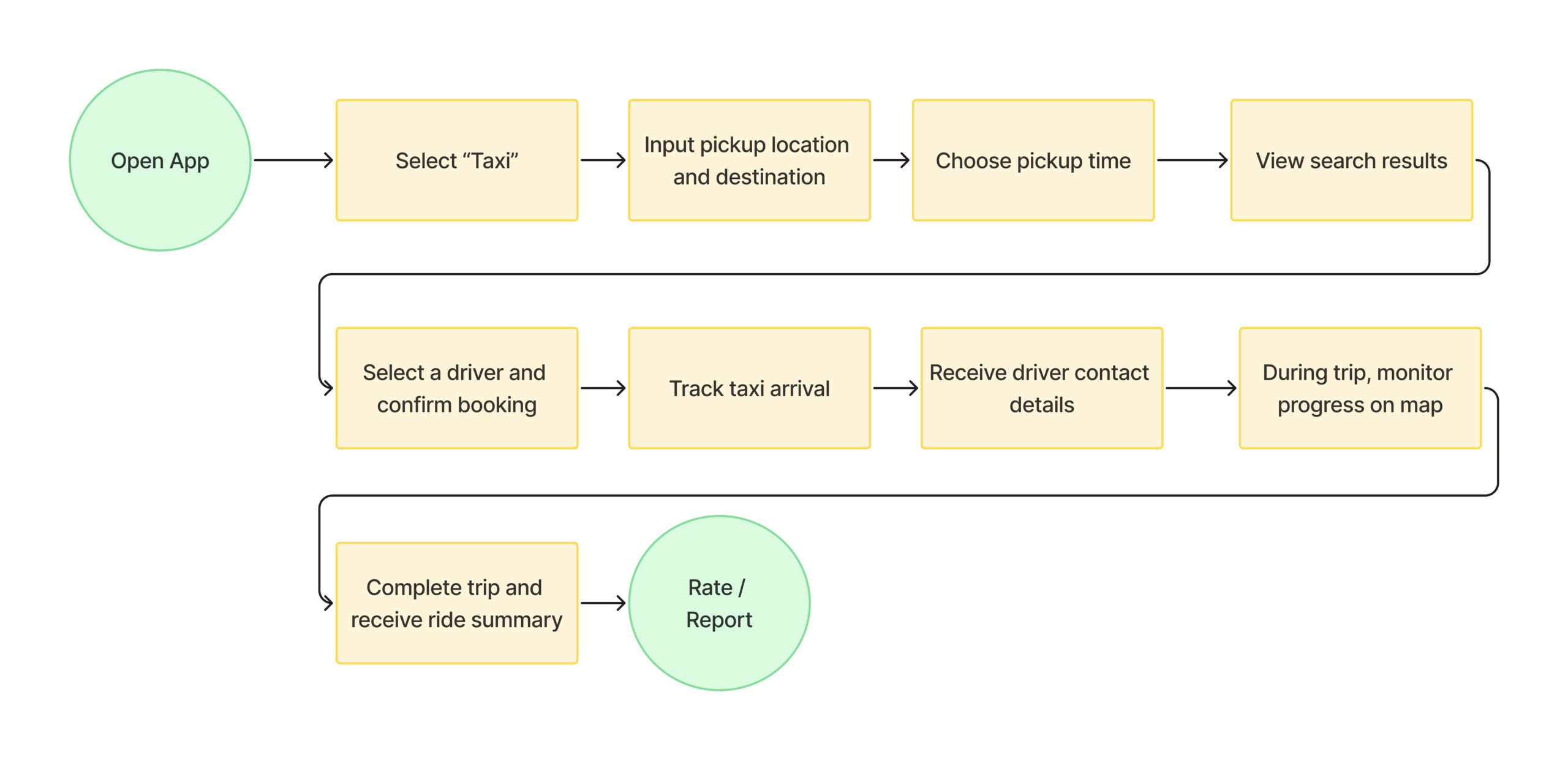
To translate the user goals into actionable design, we mapped out detailed task flows for each core service: taxi, bus, delivery, and moving. Each flow breaks down the step-by-step process users take to complete key tasks, from login to order completion.
These task flows serve as blueprints for wireframing, ensuring every necessary screen and interaction is covered.
By defining clear, logical flows, we build confidence that the product will meet real user needs smoothly and intuitively.
PHASE 4
🕸️ Wireframes
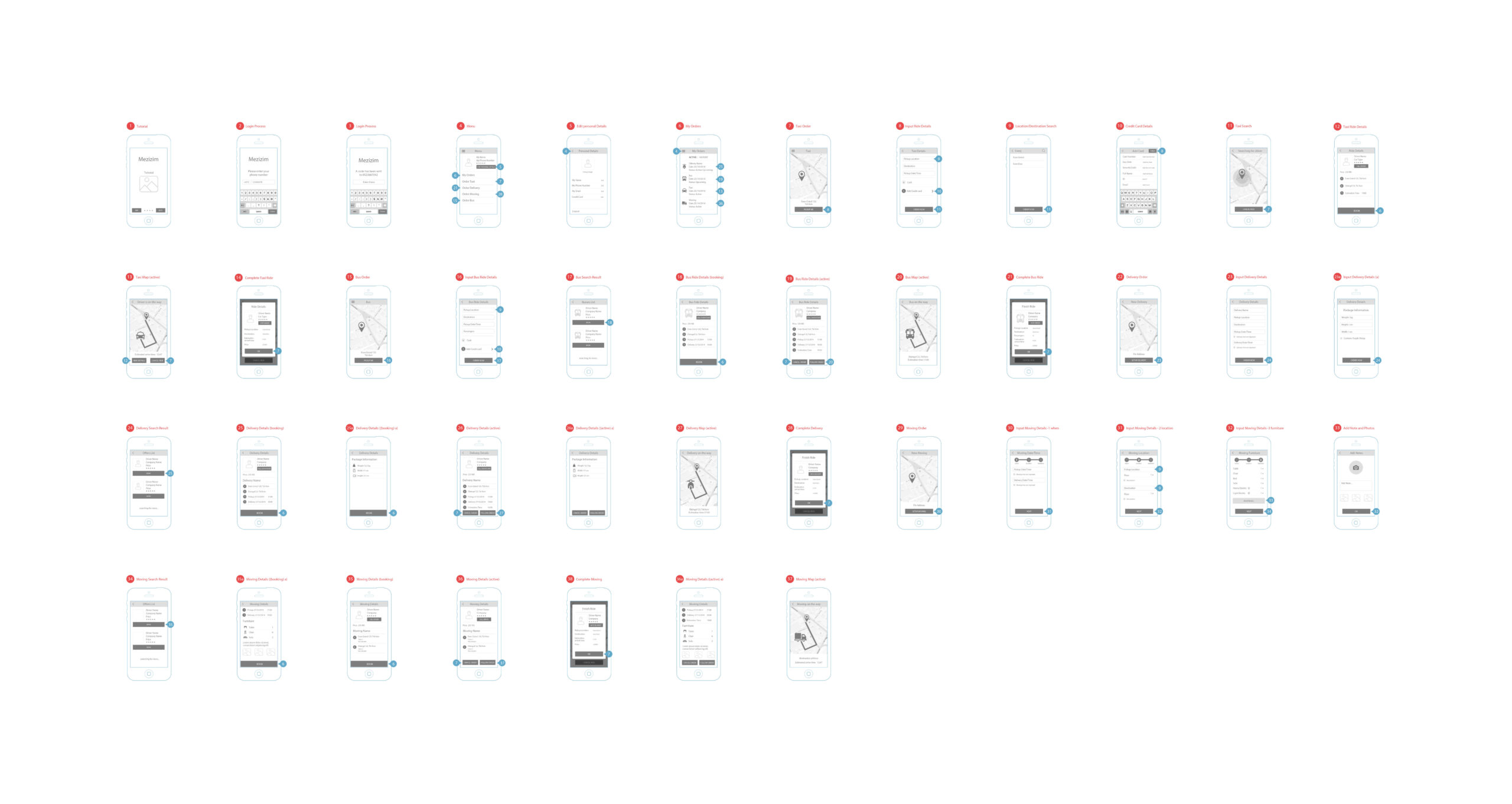
Wireframes covered all key screens: Login and onboarding, main service menu, detail inputs for each service, offer comparison, real-time tracking, and order management.
Each wireframe made business logic clear, including actions like cancel, finish, or repeat an order. All possible user goals and paths were included, so the client had a practical, testable prototype.
Outcome
Building a detailed wireframe before UI or development saved both time and money. The client was able to fully understand the scope of the whole app, estimate the total budget, and make informed decisions on which user flows and features to include first in the MVP.
Having all flows visualized gave clear priorities for initial development and helped plan the resources needed for later stages. This approach ensured there were no surprises, avoided costly changes, and provided full clarity before any code was written.
Have a cool idea? Let’s MVP it!